
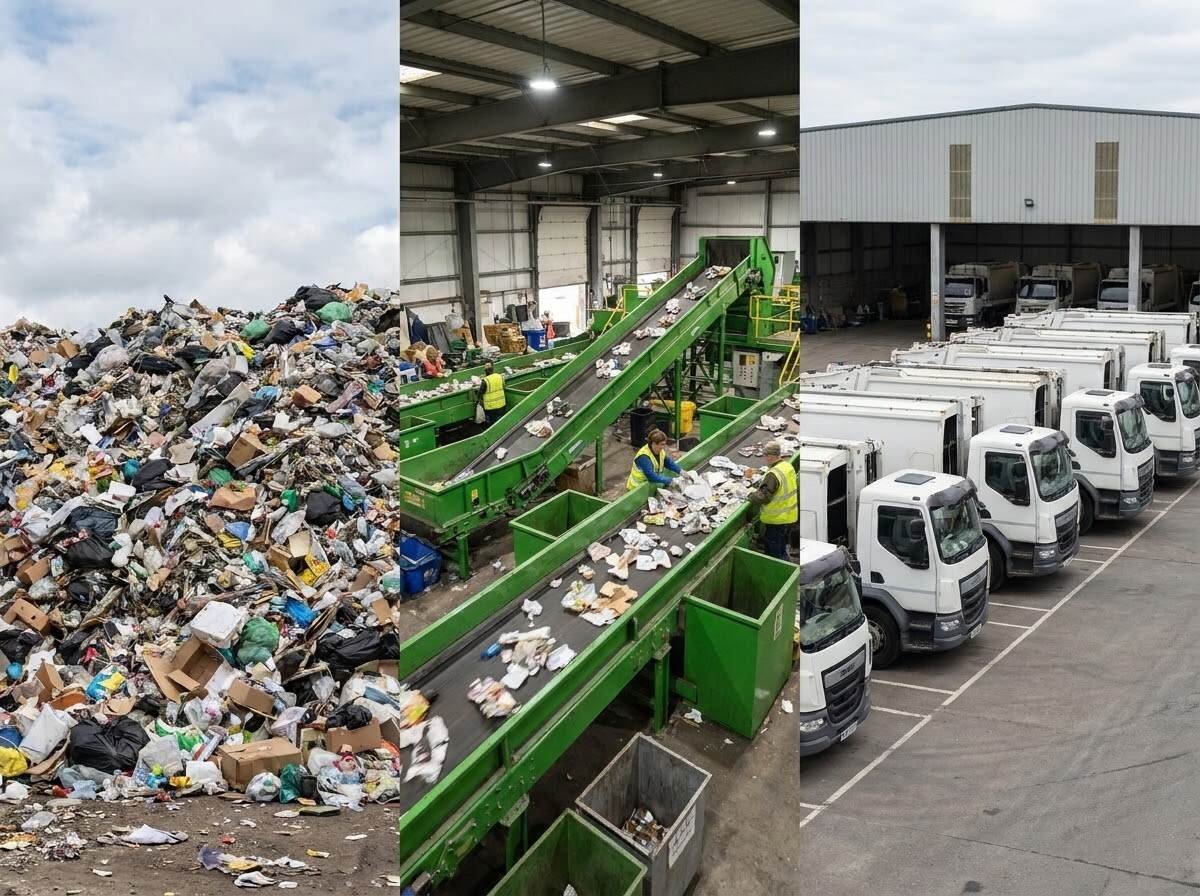
Landfill, Recycling & Waste Sorting Odor Control
Fixed and mobile misting systems engineered to neutralize intense odors at landfills, recycling centers, sorting lines and waste transfer stations—protecting staff, surrounding neighborhoods and the vital value your facility provides to the city.
Discuss Your Site- UL-Certified Formula (USA)
- Water-Based Neutralizer
- Fixed & Mobile Deployment
What Is the Problem?
Landfills, recycling plants and waste transfer stations handle high volumes of mixed and organic waste daily. Unloading trucks, sorting streams and open tipping areas release persistent odors that travel beyond site boundaries—putting essential urban infrastructure at odds with the city it serves.
-
Urban & Neighbor Disruption
Wind carries foul emissions into surrounding neighborhoods and commercial districts, polluting local air quality and triggering resident complaints and regulatory pressure.
-
Worker Health & Comfort
Continuous exposure on tipping floors and manual sorting lines causes fatigue, discomfort and reduced operational efficiency for on-site teams.
-
Preserving Your Value to the City
Your facility keeps the city clean, sustainable and circular. Eliminating odors protects that civic reputation so your vital public service is recognized rather than resented.
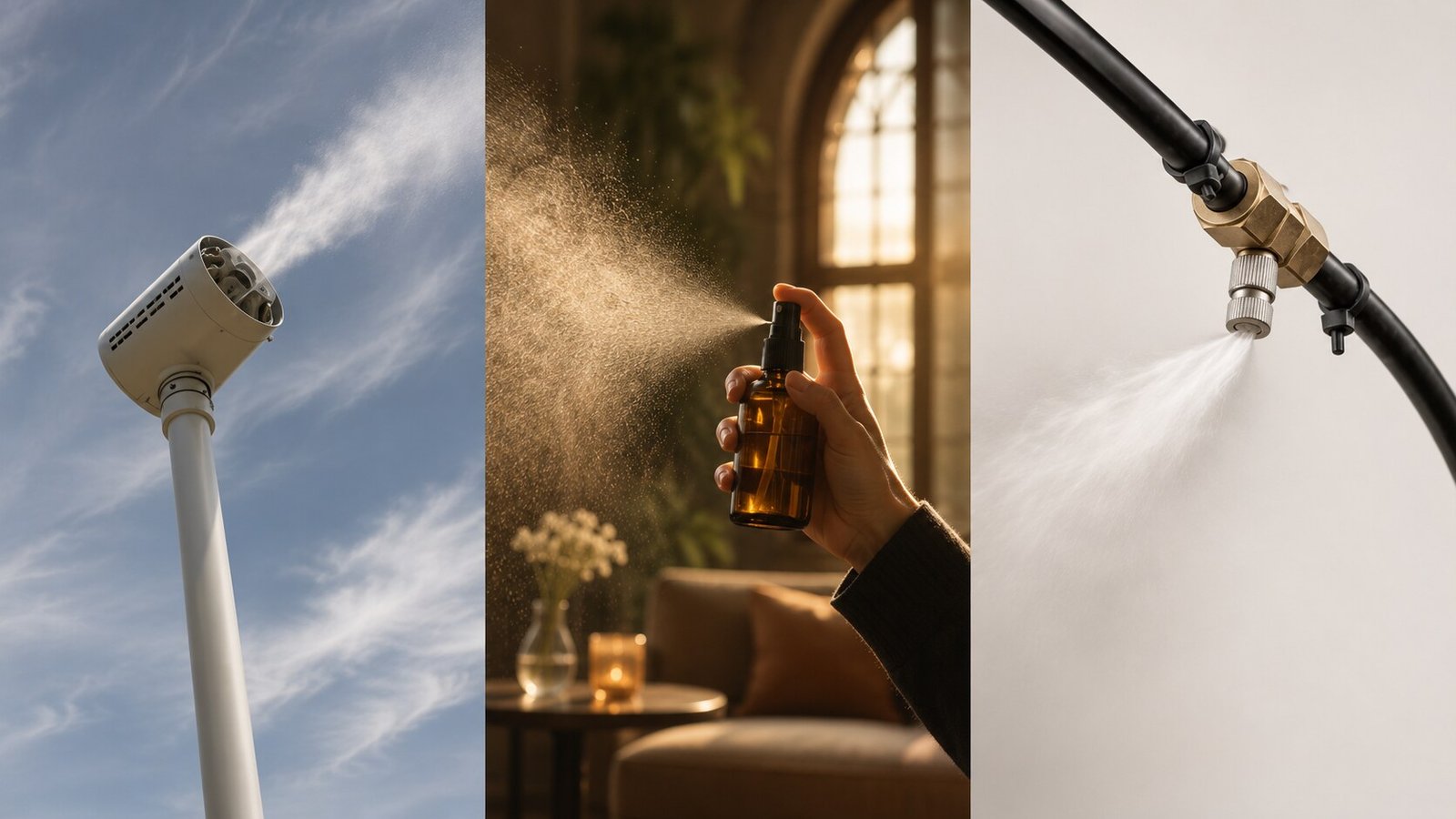
Where Treatment Can Be Applied
-
Landfill Active Faces & Perimeters
Boundary misting lines and mobile units along active dumping cells to intercept odors before wind carries them toward nearby roads and residential communities.
-
Recycling & Waste Sorting Halls
Overhead misting rails positioned above conveyor transfer points, manual sorting lines and baling zones to improve indoor air quality for staff.
-
Tipping Floors & Transfer Stations
Targeted misting curtains around truck unloading bays, hoppers and compactors where sudden odor surges occur during peak dumping hours.
Questions & Answers
Should we use a fixed perimeter system or mobile misting units?
Fixed lines are ideal for permanent tipping bays, sorting halls and boundary fences. Mobile units work best on active landfill cells where the working face shifts over time. Many facilities combine both based on site layout and daily waste volume.
What dilution is used for landfill and waste sorting applications?
The standard range is one part concentrate to 10–20 parts water (1 litre of concentrate mixed with 10–20 litres of water). The exact ratio is calibrated to waste composition, ambient heat and odor intensity following the product instructions.
Does the misting solution mask garbage smells with perfume?
No. The water-based formula is designed to neutralize odor-causing compounds in the air rather than cover them up with heavy fragrances.
Is it safe around sorting staff and nearby communities?
The neutralizer holds UL certification (USA) and is applied according to the product label and Safety Data Sheet. We engineer nozzle height, droplet size and spray direction to avoid direct wetting of workers, machinery or adjacent properties.
What determines the daily operating cost?
Running cost depends on nozzle count, dilution ratio, active dumping hours and timer or wind-triggered automation. We provide a clear consumption estimate from your site dimensions and shift schedule.
What details do you need to propose a misting layout?
Share the approximate facility area, daily waste tonnage, main emission points (tipping floor, sorting line, open cell or perimeter) and distance to neighboring buildings. Site photos or a simple layout plan help us size the system accurately.
Discuss Your Landfill or Recycling Facility
Send us a few site photos or a layout plan, your approximate daily waste volume and where odors are most noticeable. We will recommend a practical fixed or mobile misting setup.