Technology has always aimed to make human life easier, faster, and more comfortable. Along this path, it has continuously improved itself and tried to solve its challenges. However, the rapid growth of technology, together with the increasing global population and rising demand for resources, has placed significant pressure on nature and caused damage to natural resources and ecosystems.
Disinfection and cleaning are a clear example of this tension. As populations grew and people moved into dense cities, the need to keep water, air, food, and surfaces free of harmful microbes became one of the most important public health priorities of the modern age. The methods we developed to meet that need saved countless lives — but many of them came at a cost to the very environment we depend on.
Today, we’re at a turning point. The question is no longer just “how do we kill germs?” but “how do we keep things clean without leaving harmful residues behind?” To understand where disinfection is heading, it helps to look at where it has been.
The age of chemicals
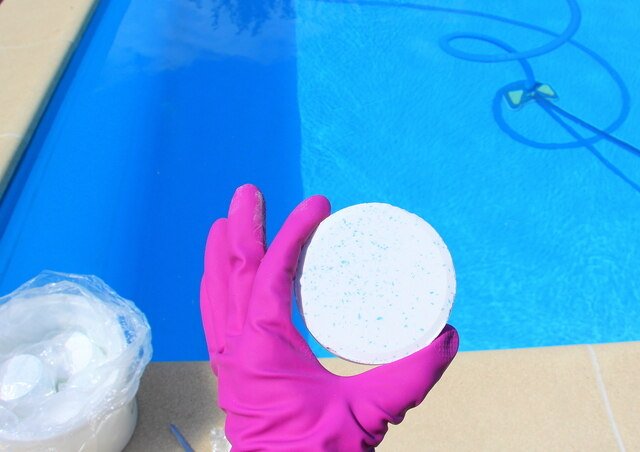
For most of the last century, chemical disinfection ruled. Chlorine became the backbone of municipal water treatment, swimming pools, and surface cleaning. Bleach, quaternary ammonium compounds, formaldehyde, and a long list of other chemicals filled hospital cupboards, food-processing plants, and household cabinets.
These chemicals worked, and they’re still widely used. But over time, their downsides became harder to ignore:
- Residues. Many chemical disinfectants leave traces on surfaces, in water, and in food. Chlorine, for example, can form byproducts like trihalomethanes that are increasingly restricted in food and water applications.
- Resistance. Just as overuse of antibiotics breeds resistant bacteria, overuse of certain disinfectants can encourage hardier microbial strains.
- Health and safety risks. Handling, storing, and disposing of strong chemicals carries real risks for workers and the public.
- Environmental damage. Chemical runoff reaches soil, rivers, and groundwater, harming ecosystems far from where it was used.
The result is a familiar modern dilemma: the tools we built to protect health now create new problems of their own.
The shift toward cleaner methods
In response, a new generation of disinfection methods has emerged — methods designed to be effective and environmentally responsible at the same time. Several approaches lead the way:
Ultraviolet (UV) light uses specific wavelengths to inactivate microorganisms without chemicals. It’s clean and fast, but it only works where the light can reach — it can’t penetrate shaded surfaces, porous materials, or cloudy water.
Steam and heat kill microbes physically, with no chemical residue. They’re excellent for certain surfaces but impractical for large spaces, sensitive materials, or air and water treatment at scale.
Ozone stands out among all of these. It’s a method that combines the power of a strong chemical with the clean profile of a physical one — and it’s why it has become the foundation of modern, chemical-free disinfection.
Why ozone is the centerpiece of modern disinfection
Ozone (O₃) is simply oxygen with one extra atom. It occurs naturally in the upper atmosphere, where it shields the planet from the sun. As a disinfectant, it’s remarkable for one reason above all: it’s one of the most powerful oxidizers available — far stronger than chlorine — yet it leaves nothing behind.
When ozone contacts bacteria, viruses, mold, or other pathogens, it oxidizes and destroys them on contact. Then, within minutes, it naturally reverts back into ordinary oxygen. No residue on surfaces. No chemical taste in water. No buildup in food. No toxic byproducts to dispose of.
That single property — powerful while it works, harmless once it’s done — is what makes ozone uniquely suited to the demands of the modern world. It addresses the exact dilemma we started with: how to stay clean without damaging the environment in the process.
Ozone also has a practical advantage. It’s generated on-site from the air around us, using only electricity. There are no chemicals to order, transport, or store. The machine pulls in air, concentrates the oxygen, and converts it into ozone exactly when and where it’s needed.
Where modern ozone disinfection is used
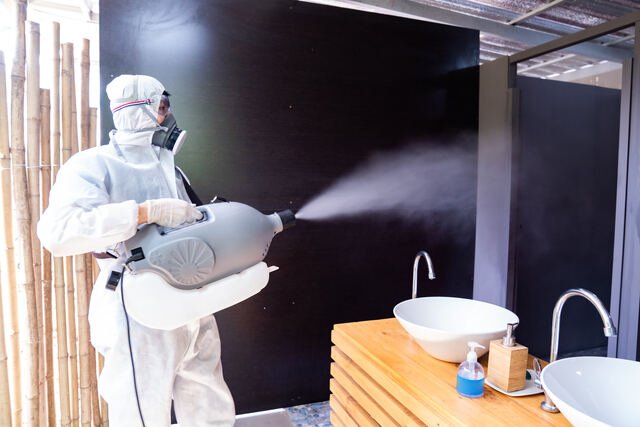
Because ozone is versatile and leaves no trace, it has found a home across many sectors:
- Air treatment — neutralizing odors and airborne microbes in hotels, vehicles, offices, and homes
- Water treatment — purifying drinking water, swimming pools, and process water without chlorine overload
- Surface disinfection — sanitizing clinics, kitchens, and food-handling areas
- Food and produce — washing fruits and vegetables to remove microbes and surface residues
- Agriculture and aquaculture — protecting crops and farmed fish without chemical inputs
In each case, the appeal is the same: genuine cleaning power, with nothing left behind.
The Darbune approach
At Darbune, this is exactly the philosophy we build around. Our ozone solutions are designed to deliver powerful, reliable disinfection for air, water, surfaces, and produce — without the chemicals, residues, and environmental cost that defined earlier methods.
The world doesn’t have to choose between staying clean and protecting nature. Modern disinfection, done right, lets us do both. That’s the future we’re working toward — one chemical-free system at a time.
Want cleaner disinfection without the chemicals?
Darbune provides ozone-based solutions for air, water, surfaces, and produce across the UAE and GCC. Get in touch for a free assessment and see what chemical-free clean looks like.