
Hydrogen sulfide (H₂S) is one of the most common and recognizable odor-causing gases found in both natural and industrial environments. It is well known for its distinctive rotten egg smell and is often associated with wastewater systems, sewage networks, waste storage areas, and organic decomposition.
Because humans can detect hydrogen sulfide at extremely low concentrations, even a small amount of this gas can generate strong odor complaints. For this reason, hydrogen sulfide is one of the primary targets of modern odor control systems.
What Is Hydrogen Sulfide?
Hydrogen sulfide is a colorless gas composed of hydrogen and sulfur atoms. It is naturally produced when bacteria break down organic matter in environments with little or no oxygen.
This process, known as anaerobic decomposition, commonly occurs in sewage systems, wastewater treatment facilities, septic tanks, drains, and waste storage areas.
Although hydrogen sulfide occurs naturally, excessive concentrations can create odor problems, corrosion issues, and air quality concerns.

Why Does Hydrogen Sulfide Smell Like Rotten Eggs?
Hydrogen sulfide has one of the most recognizable odors in the world. The characteristic rotten egg smell occurs because sulfur-containing compounds strongly stimulate the human sense of smell.
People can often detect hydrogen sulfide at extremely low concentrations, long before it reaches levels that could create operational or safety concerns. This sensitivity explains why H₂S is responsible for many odor complaints in residential, commercial, and industrial environments.
Where Is Hydrogen Sulfide Commonly Found?
Hydrogen sulfide is generated wherever organic matter decomposes in low-oxygen conditions.
Common sources include:
- Wastewater treatment plants
- Sewage collection systems
- Pumping stations
- Septic tanks
- Floor drains
- Garbage rooms
- Food waste storage areas
- Industrial processing facilities
- Landfills
Restaurants and commercial kitchens may also experience hydrogen sulfide odors when grease traps, drains, or food waste systems are not properly maintained.

Why Is H₂S a Major Odor Problem?
Hydrogen sulfide presents several challenges for facilities and businesses.
Strong Odor
Even very small concentrations can create noticeable and unpleasant smells.
Customer Complaints
Persistent rotten egg odors can negatively affect customer experience in restaurants, hotels, gyms, and commercial buildings.
Indoor Air Quality Concerns
Poor odor management can reduce occupant comfort and create negative perceptions regarding cleanliness and hygiene.
Infrastructure Damage
In wastewater environments, hydrogen sulfide can contribute to corrosion of pipes, equipment, and infrastructure, increasing maintenance costs.

How Is Hydrogen Sulfide Controlled?
Effective odor control begins by reducing the conditions that allow hydrogen sulfide to form.
Source Reduction
Regular cleaning, proper drainage maintenance, and waste management practices can help minimize organic buildup and reduce H₂S generation.
Photocatalytic Oxidation (PCO)
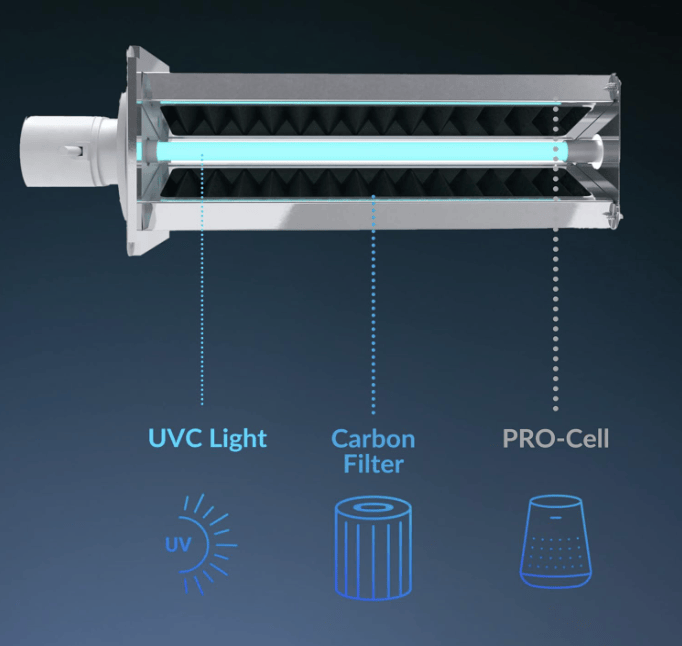
Photocatalytic Oxidation (PCO) combines UV light with a specialized catalyst, typically titanium dioxide (TiO₂). When activated by UV light, the catalyst generates reactive compounds that help break down VOCs, sulfur compounds, and certain odor-causing contaminants.
PCO systems are increasingly used in commercial buildings, healthcare facilities, kitchens, and indoor air treatment applications where both odor control and air purification are required.
Hydroxyl Technology
Hydroxyl generators produce naturally occurring hydroxyl radicals that react with airborne contaminants, VOCs, and odor-causing compounds. Because hydroxyl technology can often operate in occupied spaces, it has become a popular solution for hotels, offices, healthcare facilities, and commercial buildings.
Activated Carbon Filtration
Activated carbon is one of the most commonly used technologies for hydrogen sulfide control. Specialized carbon media can adsorb sulfur compounds and significantly reduce odors.
Ozone Technology
Ozone is a powerful oxidizing agent that can react with hydrogen sulfide and other sulfur-containing compounds. By breaking down odor-causing molecules, ozone can help reduce unpleasant smells at their source rather than simply masking them.
For this reason, ozone technology is increasingly used in odor treatment applications involving waste rooms, wastewater facilities, kitchens, and commercial environments.
Chemical Scrubbers
Industrial facilities often use chemical scrubbers to neutralize hydrogen sulfide before it is released into the environment.
Integrated Odor Control Systems
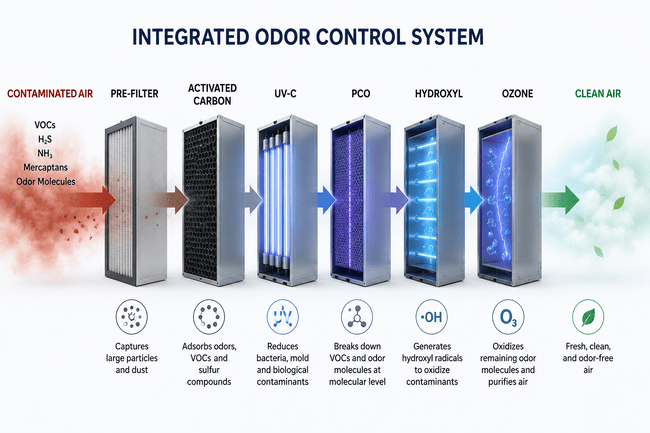
In many applications, the most effective odor control strategy combines multiple technologies. Activated carbon filtration may be used to capture sulfur compounds, while UV-C, PCO, hydroxyl generation, or ozone treatment provide additional reduction of odor-causing contaminants.
By combining multiple treatment stages, facilities can achieve higher odor removal efficiency and better indoor air quality.

Why Businesses Should Pay Attention to H₂S
For businesses, odor control is about more than comfort. Customers often associate unpleasant odors with poor hygiene and low-quality facilities.
Restaurants, hotels, gyms, pet facilities, and waste management operations can all benefit from proactive odor management strategies. Addressing hydrogen sulfide problems early can improve customer satisfaction, employee comfort, and overall environmental quality.
Conclusion
Hydrogen sulfide (H₂S) is one of the most common sulfur-based gases responsible for unpleasant odors in wastewater systems, waste rooms, drains, and industrial facilities. Its characteristic rotten egg smell can be detected at extremely low concentrations, making it a major source of odor complaints.
Effective hydrogen sulfide control requires more than simply masking odors. Modern odor management solutions such as source reduction, ventilation, activated carbon filtration, chemical scrubbing, and ozone treatment can help reduce H₂S levels and improve indoor and outdoor air quality.
As awareness of air quality continues to grow, controlling hydrogen sulfide remains an important part of creating cleaner, healthier, and more comfortable environments.