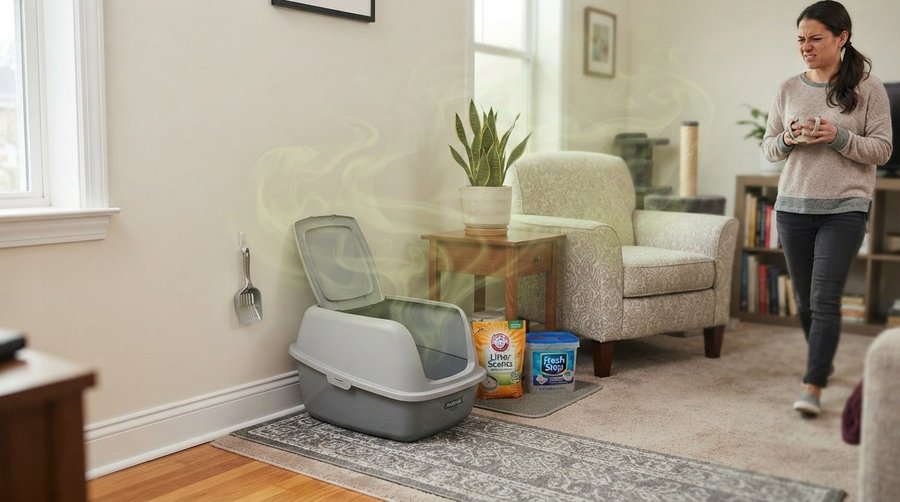
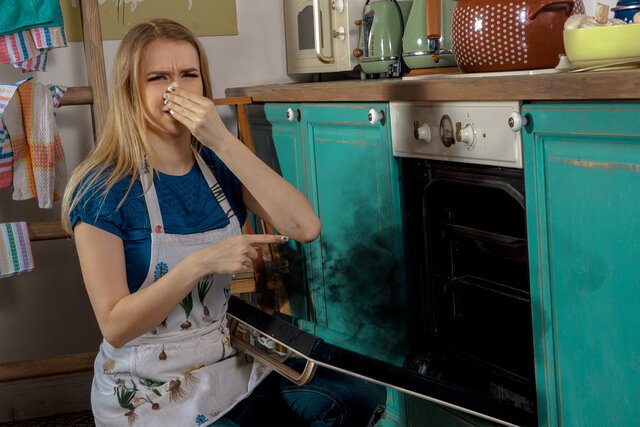
The kitchen is one of the most common sources of unpleasant indoor odors. Cooking fresh meals can leave behind smells from frying oil, fish, garlic, onions, spices, smoke, grease, and food waste. In many homes and restaurants, these odors remain long after cooking has finished and can spread to other rooms.
Many people try to solve the problem with air fresheners, candles, or perfumes. These products may make the room smell pleasant for a short time, but they usually mask the odor instead of removing the compounds that cause it. To choose the best kitchen odor eliminator, we first need to understand where kitchen odors come from and which technologies can actually reduce them.

Why Do Kitchen Odors Last So Long?
Cooking releases a mixture of airborne particles, moisture, grease vapors, smoke, and gases. Some of these compounds remain in the air, while others attach to curtains, furniture, walls, cabinets, carpets, and ventilation systems.
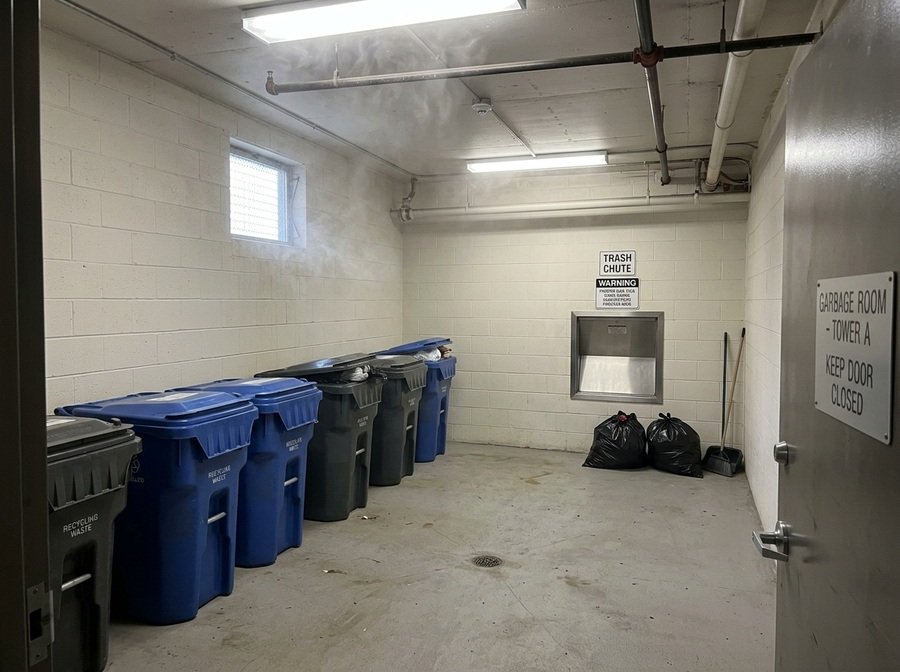
Common sources of kitchen odors include frying, grilling, fish and seafood, garlic and onions, strong spices, burnt food, garbage bins, food waste, sink drains, dishwashers, grease traps, and poor ventilation.
Many kitchen odors are also linked to Volatile Organic Compounds (VOCs), grease particles, smoke compounds, sulfur-based odors, and decomposition gases from food waste. This is why ordinary cleaning is not always enough.
Why Air Fresheners Do Not Solve the Problem
A fresh smell does not always mean clean air.
Most air fresheners simply add fragrance to the air. They do not remove VOCs, smoke, grease particles, sulfur compounds, or food waste gases. Once the fragrance fades, the original kitchen odor often returns.
A real kitchen odor eliminator should reduce the odor-causing compounds instead of covering them with another smell.
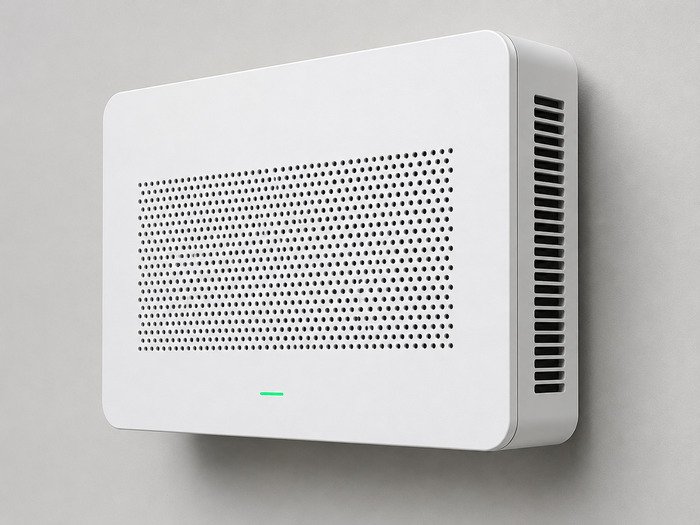
What Makes a Good Kitchen Odor Eliminator?
An effective kitchen odor eliminator should be able to target the main causes of kitchen odors, including:
- Cooking smoke
- Grease vapors
- VOCs
- Food decomposition gases
- Sulfur compounds
- Moisture-related odors
- Bacteria and mold
Because these contaminants are different, one simple product is rarely enough for every kitchen. The best solution depends on the source and strength of the odor.
Different Types of Kitchen Odor Eliminators
Activated Carbon Filters
Activated carbon is one of the most widely used materials for odor control. Its highly porous structure adsorbs VOCs, smoke, cooking odors, chemical fumes, and many organic compounds responsible for unpleasant smells.
For kitchens, activated carbon is one of the most practical and cost-effective options. It can be used in air purifiers, range hood filters, HVAC systems, restaurants, commercial kitchens, and odor control units.
Activated carbon is especially useful for cooking odors, smoke, VOCs, and grease-related compounds. However, standard activated carbon may not be equally effective for every gas, which is why specialized or impregnated carbon is sometimes used for more difficult odors.

Combined Activated Carbon and Zeolite Filters
A combined activated carbon and zeolite filter can provide broader odor control than using either material alone.
Activated carbon is strong at adsorbing VOCs, smoke, cooking odors, and organic compounds. Zeolite helps with moisture, ammonia, and selected gases. Together, they can cover a wider range of odor problems found in kitchens, garbage areas, and food preparation spaces.
This type of combined filter is often one of the most economical solutions for continuous odor control because it does not require complex operation and can work as part of a simple filtration system. For many homes, restaurants, and commercial kitchens, a carbon-zeolite filter offers a strong balance between cost, performance, and maintenance.
Photocatalytic Oxidation (PCO)
Photocatalytic Oxidation, or PCO, combines UV light with a catalyst surface, usually titanium dioxide. When activated, the system can help break down VOCs and certain odor-causing gases at the molecular level.
Depending on the design and operating conditions, PCO may help reduce odors associated with VOCs, hydrogen sulfide (H₂S), ammonia (NH₃), and other airborne contaminants. It is often used in advanced air purification systems where both air cleaning and odor reduction are required.
Hydroxyl Generators
Hydroxyl generators produce hydroxyl radicals that react with VOCs, airborne contaminants, and odor-causing compounds. One important advantage is that hydroxyl technology can often be used in occupied spaces, depending on the system and application.
For restaurants, hotels, offices, and commercial kitchens, hydroxyl generators can support continuous odor management, especially when odors are present during daily operation.
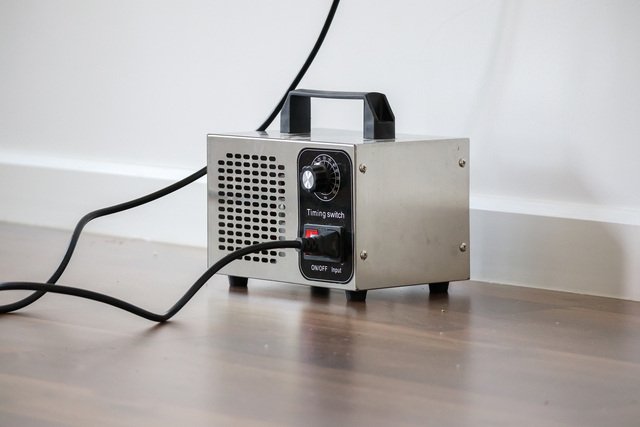
Ozone Treatment
Ozone is one of the most powerful technologies available for severe odor removal. It works by oxidizing odor-causing molecules instead of masking them.
Ozone can be effective for smoke odors, burnt food odors, grease contamination, sulfur-based odors, and persistent kitchen smells. However, ozone is not designed for continuous 24-hour use in occupied spaces. It is usually applied as a short-term shock treatment for severe odor problems. During ozone treatment, people, pets, and plants should not remain in the treated area, and the space must be properly ventilated before reoccupation.

Which Solution Is More Affordable?
The most affordable solutions are usually zeolite and standard activated carbon filters. They are simple, easy to use, and suitable for many daily kitchen odor problems.
A combined activated carbon and zeolite filter is often one of the best low-cost options because it handles a wider range of odors than either material alone.
PCO, hydroxyl generators, and ozone systems usually require higher investment, but they may be more effective for commercial kitchens, restaurants, severe odors, or spaces where ordinary filters are not enough.
Conclusion
The best kitchen odor eliminator is not always the most expensive device. For many homes and restaurants, activated carbon, zeolite, or a combined activated carbon and zeolite filter can provide practical, affordable, and continuous odor control.
For stronger or more complex odor problems, technologies such as UV-C, PCO, hydroxyl generators, and ozone treatment may be needed. Since kitchen odors can come from smoke, grease, VOCs, food waste, sulfur compounds, bacteria, and moisture, the most effective approach is often a multi-stage odor control system.
By understanding the source of the odor and choosing the right technology, homes, restaurants, and commercial kitchens can create cleaner air, reduce unpleasant smells, and improve the overall indoor environment.