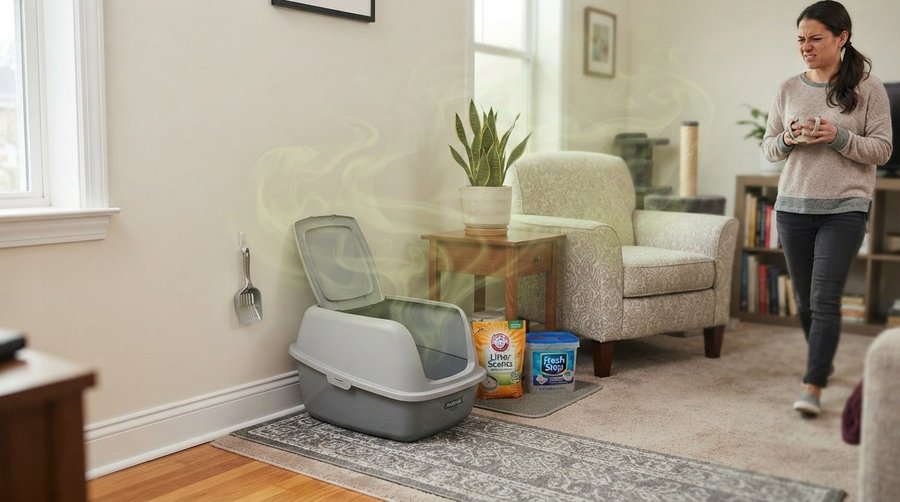
A litter tray can be clean and still leave a smell in the room. Pet bedding, upholstery and lingering urine stains can also contribute to the odour.
Before choosing a pet odour eliminator, check where the smell is strongest. A small litter area may need local odour control. A living room with airborne particles and lingering smells may call for a different approach.
This guide explains what to expect from activated carbon bags, compact plasma-based devices and pet air purifiers. It also covers the questions to ask before bringing an electronic odour-control device into your home.
Find the source before treating the air
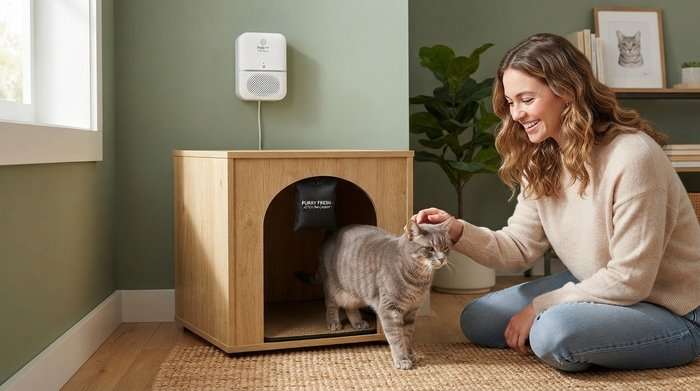
Check the litter tray first, including the tray itself and the floor around it. Then look at bedding, rugs and the places your pet likes to sleep.
Wash suitable fabrics according to their care instructions. For urine accidents, choose a cleaner intended for pet urine and suitable for the affected surface. Residue inside a cushion or beneath a rug needs direct cleaning.
An odour-control product can support this routine. It cannot remove waste or clean a stained surface. The EPA recommends controlling pollution sources and using appropriate ventilation as the first steps in improving indoor air quality. EPA guidance on home air cleaners
Activated carbon bags for pet odour
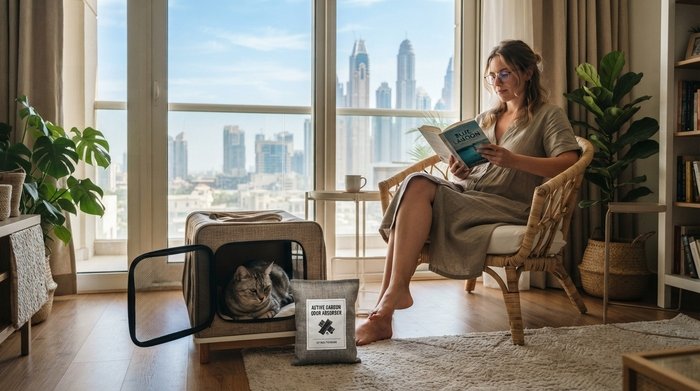
Activated carbon has a porous surface that can hold certain airborne compounds through adsorption. A passive bag relies on the surrounding air coming into contact with the carbon.
That makes placement important. So do the amount of carbon and the compounds causing the smell. A small bag near a pet area should not be assumed to treat a whole room.
The EPA identifies activated carbon as a material used in gas filtration. This explains the principle, rather than proving how well any particular bag performs. EPA guidance on gas filtration
Before choosing a bag, check its carbon quantity, placement instructions and replacement schedule. Claims about removing specific smells should have product-specific evidence.
Keep the bag dry and out of your pet’s reach. Follow its care instructions; maintenance advice for one carbon product may not apply to another.
We offer activated carbon bags for pet odour control. Contact us for sizes, care instructions and pricing in the UAE.
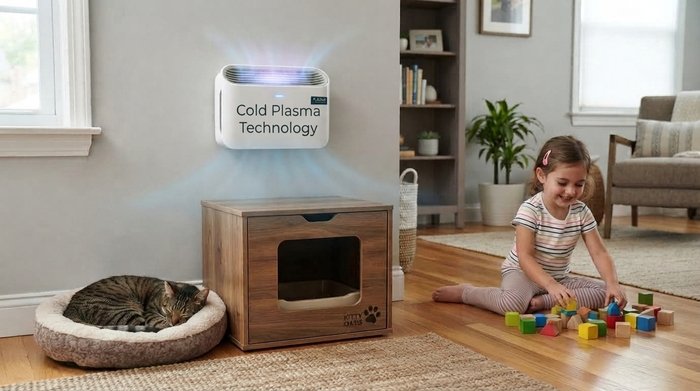
What to look for in a pet odor eliminator machine
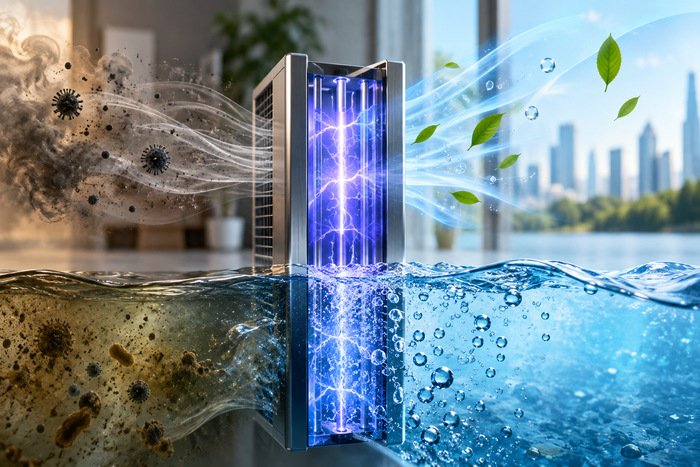
“Pet odor eliminator machine” covers several types of powered devices. Some draw air through filters. Others use plasma or another treatment method.
Our compact device uses plasma-based technology. If you are considering it for a litter area or another pet space, ask us for its specifications and operating instructions.
For any powered device, useful test information should identify:
- The exact model tested.
- The odour compound measured.
- The size and conditions of the test space.
- Emissions during operation.
Read performance claims in that context. A result from a small test chamber does not establish the same result in an open-plan home.
Noise and maintenance also matter when the device will sit near a bedroom or a pet’s resting area.
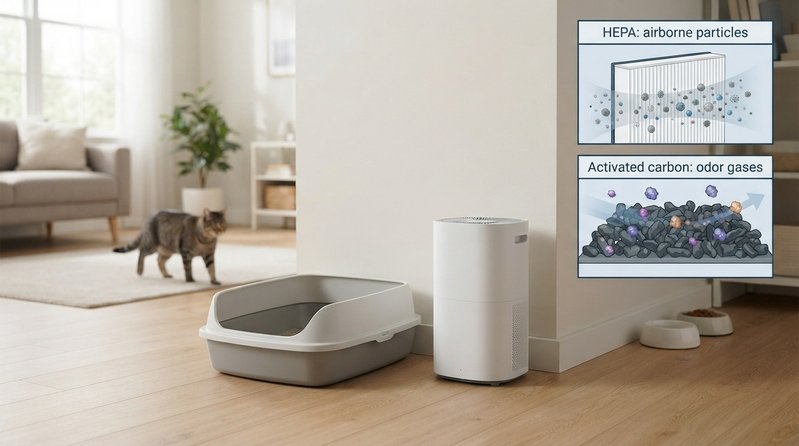
Choosing an air purifier for litter box odor
When comparing an air purifier for litter box odor, check what it does with gases. HEPA filters primarily capture particles. A suitable gas-treatment stage, such as activated carbon, is needed to address certain airborne odour compounds. EPA air-cleaner selection guidance
A pet air purifier may suit a household that also wants particle filtration. Look at the actual filter composition and replacement costs before buying.
Place the unit according to its instructions. Leave the air openings clear and keep it away from places where your pet could knock it over or spill water onto it.
Comparing the options
| Option | Main function | What to check |
| Activated carbon bag | Passive adsorption of certain odour compounds | Carbon quantity, placement and maintenance |
| Compact cold plasma device | Powered treatment using reactive species | Model-specific performance, emissions and usage instructions |
| HEPA-only purifier | Captures airborne particles | Room suitability and filter replacement costs |
| Purifier with carbon filtration | Particle filtration and adsorption of certain gases | Carbon quantity, gas-removal evidence and maintenance |
A carbon bag offers a simple placement option without a power connection. A powered device needs closer attention to operating conditions. A room purifier may be relevant when particle filtration is part of your goal.
Choose around the problem you have and the evidence available for the product.
Read why some air purifiers do not remove odours before comparing filtration options.
Finding the best pet odor eliminator machine for your space
The best pet odor eliminator machine for your home should fit the room and have evidence relevant to the smell you want to address.
When contacting a supplier, describe the source and approximate room size. Mention whether the space connects to other rooms. Ask for performance reports, emissions information and maintenance requirements.
For a UAE home, also confirm that the power supply and operating limits suit the intended installation.
A clear specification sheet is more useful than a broad promise to eliminate every pet smell.
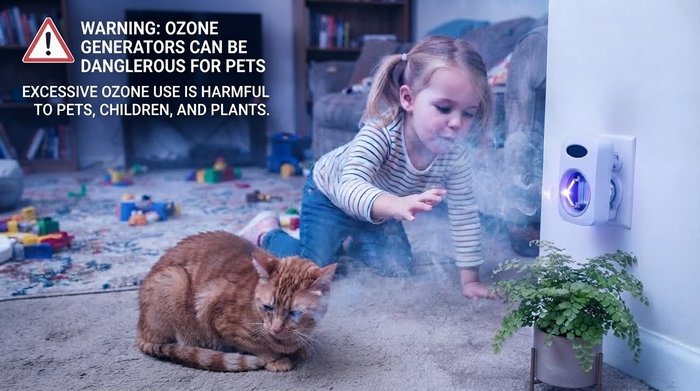
Using Cold Plasma devices around people and pets
Some devices marketed for pet odour control use ozone generators. Ozone can harm respiratory health, so check the technology before choosing a device for a space shared by people and pets. The EPA advises against using ozone generators in occupied spaces. EPA guidance on ozone generators
Our compact device uses cold plasma technology. Contact us for its safety test information and recommended operating conditions so you can assess its suitability for your home
Common questions about pet odour control
Will a carbon bag remove every litter box smell?
Results depend on the bag, placement and compounds causing the smell. Keep up with waste removal and tray cleaning rather than relying on the bag alone.
Does a HEPA filter remove pet odour?
HEPA filtration targets particles. For airborne smells, check for a suitable gas-treatment stage and supporting performance evidence.
Where should I put a carbon bag?
Use a dry location recommended by the manufacturer. Keep it beyond your pet’s reach so it cannot be chewed or torn.
Can I use a carbon bag alongside a compact device?
Follow both products’ instructions and keep the device’s air openings clear. Improved performance from the combination should not be assumed without testing.
How can I get advice about pet odour control in the UAE?
Contact us with details of your pet area. We can discuss our activated carbon bags and compact plasma-based device, including specifications, availability and pricing.
Contact us about your pet area
Tell us which pets you have, where you notice the smell and the approximate size of the space.
Contact us for information about activated carbon bags and our compact plasma-based device, including placement guidance, availability and pricing in the UAE.