
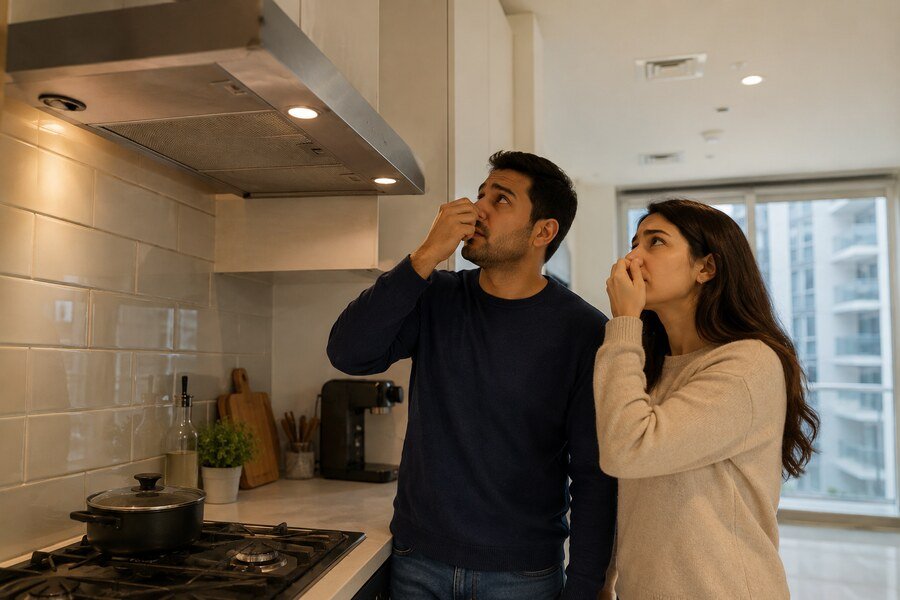
Food odors are a common problem in apartment buildings, especially when cooking smells remain inside the home or travel into shared corridors and neighboring apartments.
One simple solution that is often overlooked is kitchen hood filter replacement. Many residents use their kitchen hood every day but rarely check when the filter was last cleaned or replaced.
Over time, grease, smoke particles, and cooking residues build up in the hood filters. Activated carbon filters also gradually lose their ability to capture cooking odors.
If your kitchen still smells strongly after cooking even when the hood is running, checking the kitchen hood filter should be one of your first steps.
Why Does Cooking Smell Spread Through Apartments?
When you fry fish, cook meat, use spices or prepare food with garlic and onions, cooking releases steam, grease particles and odor-causing compounds into the air.
Your kitchen hood is designed to capture these pollutants close to their source.
However, if the hood is not working efficiently, cooking fumes can spread into the kitchen, living room and other parts of the apartment.
In apartment buildings, the problem can become bigger. Depending on the building’s ventilation and exhaust design, cooking odors may also reach shared corridors or neighboring apartments.
Air pressure differences, open doors and ventilation pathways can all contribute to odor movement.
This is why controlling food odors at the source is important—not only for your own comfort but also for your neighbors.
When Should I Change My Kitchen Hood Filter?
This is a question many residents cannot answer.
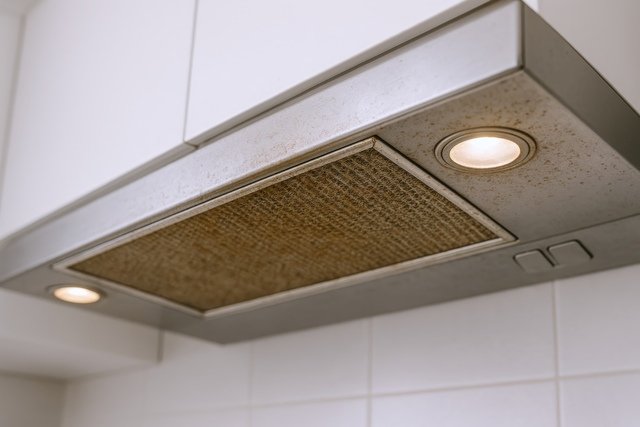
Kitchen hood filters are often hidden behind the hood cover, so it is easy to forget about them. As the filter becomes loaded with grease and contaminants, airflow through the hood can decrease. A dirty filter can also become a source of unpleasant odors itself.
As a practical reminder, inspect your activated carbon filter every 3–6 months, particularly if you cook frequently or notice that cooking odors remain after using the hood.
However, replacement frequency depends on the filter type, cooking frequency and manufacturer recommendations.
If you regularly fry food, cook fish or prepare oily meals, you may need to check the filter more frequently.
What Types of Filters Are Used in Kitchen Hoods?
The two most common types perform different jobs.
Metal Grease Filters
These are usually made from aluminum or stainless-steel mesh. Their main purpose is to capture grease particles.
Many metal grease filters are washable. They should therefore be cleaned regularly rather than automatically replaced every six months.
Activated Carbon Filters
Activated carbon filters are particularly important in recirculating kitchen hoods.
Instead of exhausting all the air outdoors, a recirculating hood passes air through filters before returning it to the kitchen.
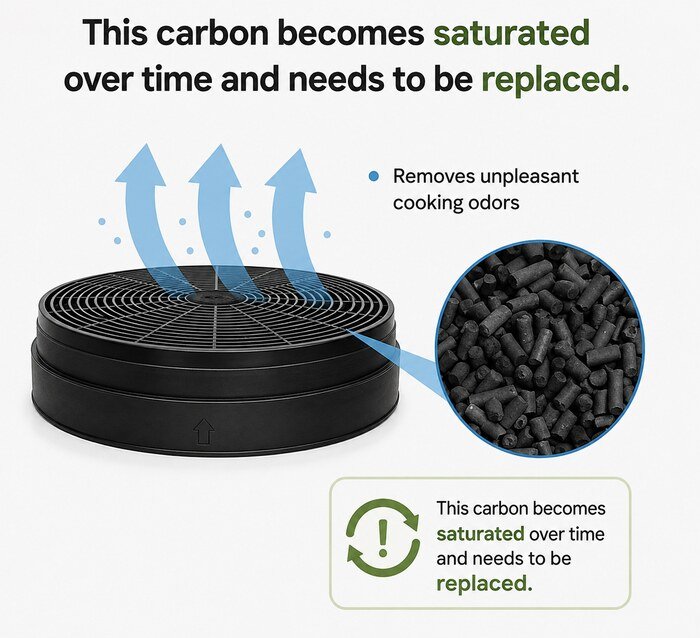
Activated carbon adsorbs many gaseous and odor-causing compounds produced during cooking.
Unlike most metal grease filters, conventional activated carbon filters eventually become saturated and need replacement.
Kitchen Hood Filter Replacement: How to Change Your Filter?
Changing a hood filter is usually simple.
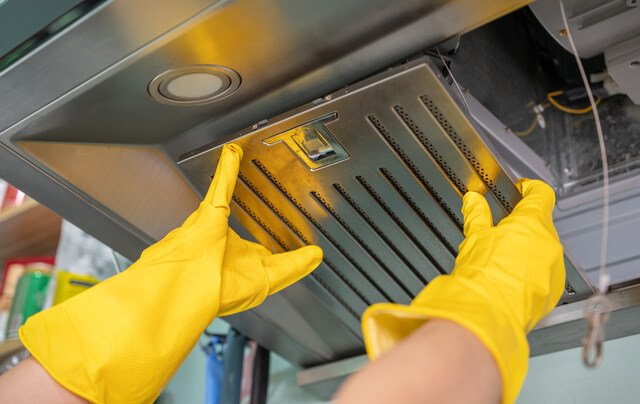
First, turn off the kitchen hood. Look underneath the hood directly above the cooking area. Most hoods have a removable metal grease filter held in place by a small clip, handle or locking mechanism.
Remove the grease filter carefully.
If your hood is a recirculating model, the activated carbon filter may be located behind the metal filter or attached closer to the fan or motor.
Remove the old carbon filter and install the compatible replacement according to the manufacturer’s instructions.
Before buying a replacement, check the brand and model number of your kitchen hood. Filter sizes, shapes and installation methods vary between manufacturers.
What If I Cannot Find the Exact Filter?
Finding the exact replacement carbon filter for an older or less common kitchen hood can sometimes be difficult.
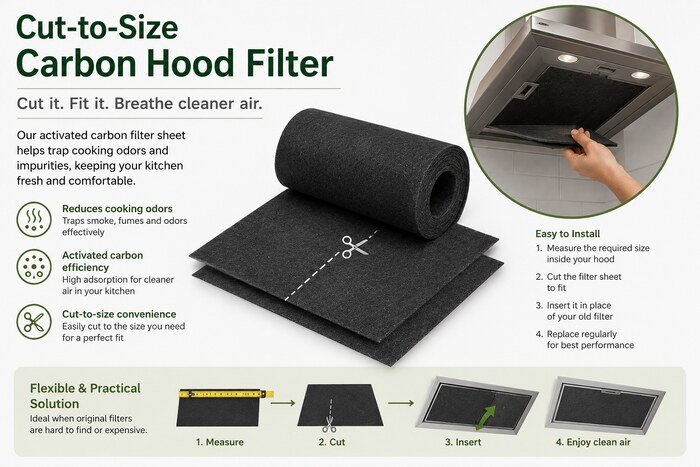
One practical option for compatible recirculating hoods is a cut-to-size activated carbon filter sheet.
These filter sheets can be supplied in larger sizes and cut to match the dimensions required by the hood. When replacement time arrives, the old sheet can simply be removed and a new piece installed.
However, a universal filter sheet should only be used where it is compatible with the hood design. It should not restrict airflow or replace a required grease filter.
Where Can I Find My Hood Filter in the UAE?
Replacement kitchen hood filters are available in the UAE through appliance suppliers, kitchen equipment companies, appliance service centers, hardware retailers and online stores.
Before purchasing, find the manufacturer and model number of your hood. Searching for the model number together with “carbon filter” or “hood filter UAE” can help you find the correct replacement.
If the original filter is unavailable or expensive, you can also check whether your hood is compatible with a cut-to-size activated carbon filter.
Start With the Simplest Solution
If food odor is spreading through your apartment, don’t immediately reach for an air freshener. Start at the source.
1. Check Your Kitchen Hood
Turn on your hood while cooking and make sure it is pulling air properly. Weak airflow may allow cooking odors to spread through your apartment.
2. Inspect the Grease Filter
Open the hood and check the metal grease filter. If it is covered with grease and cooking residue, clean it according to the manufacturer’s instructions.
3. Check the Activated Carbon Filter
If your hood uses an activated carbon filter, check when it was last replaced. Carbon gradually becomes saturated and loses its ability to adsorb cooking odors.
4. Replace the Carbon Filter When Needed
If the filter has been used for several months, smells unpleasant, or cooking odors remain even when the hood is running, it may be time to replace it. As a practical reminder, check activated carbon filters every 3–6 months.
5. Use a Cut-to-Size Filter if Compatible
If you cannot find the original replacement filter, check whether your hood can use a cut-to-size activated carbon filter sheet. Measure, cut and install it according to the hood’s requirements.
6. Make Filter Maintenance a Habit
Regularly cleaning grease filters and replacing saturated carbon filters can help reduce cooking odors before they spread into your apartment, corridor, or neighboring homes.
Check your hood → Clean the grease filter → Check the carbon filter → Replace it when needed.
Sometimes better odor control starts with something as simple as changing a filter.
Can You Wash a Kitchen Hood Carbon Filter?
If you are searching for kitchen hood carbon filter cleaning, it is important to know the difference between a carbon filter and a metal grease filter.
Standard activated carbon hood filters should not be washed. Activated carbon works by adsorbing cooking odors inside its porous structure. Once the carbon loses its odor-removal capacity, the filter should be replaced.
The metal grease filter, however, is designed to capture grease and can usually be cleaned regularly according to the hood manufacturer’s instructions.
A simple rule to remember:
- Metal grease filter → Clean it regularly
- Activated carbon filter → Replace it when needed
If you have already cleaned the grease filter but cooking odors still remain while the hood is running, check whether the activated carbon filter needs replacement.
Need Help With Your Kitchen Hood Filter?
Not sure which filter fits your kitchen hood, or need a replacement activated carbon filter?
Contact the Darbune team. We can help you find the right hood filter or a suitable cut-to-size activated carbon filter for your kitchen.