
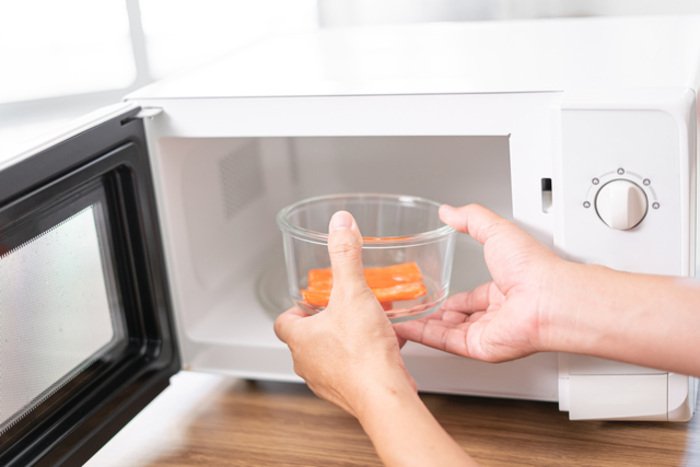
Have you ever walked into an office and immediately noticed the smell of someone’s lunch?
For many workplaces, food odors are one of the most common indoor air quality complaints. Whether it’s fish, curry, garlic, onions, or other strongly flavored meals, odors can quickly spread from the pantry to nearby workstations, meeting rooms, and hallways.
In today’s international workplaces, this challenge has become even more common. Employees from different cultures enjoy different cuisines, and while one person may love the aroma of a particular dish, others may find it distracting or unpleasant.
The goal is not to change what people eat, it’s to create a comfortable workplace where everyone can work without unwanted odors.
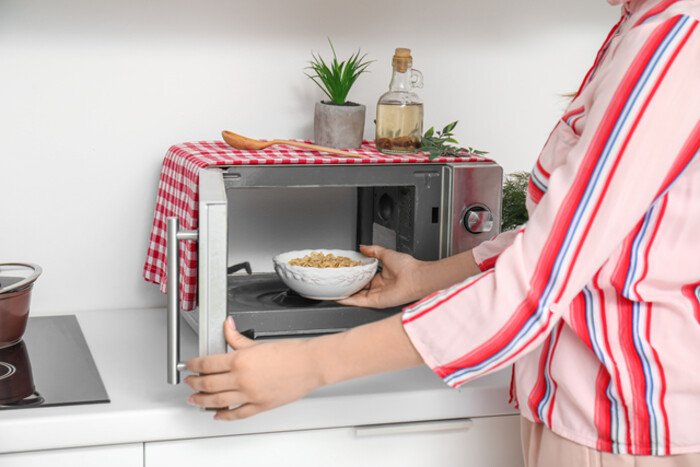
How Can You Control Office Pantry Odors?
Office pantry odors can be controlled in three steps: remove the source of the smell, improve ventilation to prevent it from spreading, and filter the remaining odor from the air.
1. Control the Odor at Its Source
Clean the microwave after spills, empty food waste regularly, keep the sink and drain clean, and store leftovers in sealed containers. If odor continues to build up on surfaces or inside waste bins, air filtration alone may not solve the problem.
2. Improve Ventilation and Limit Odor Spread
Use the pantry exhaust system while food is being heated and for a short time afterward. Where possible, keep pantry air from flowing directly into workstations, meeting rooms, and corridors. Capturing odor close to its source is more effective than trying to remove it after it has spread throughout the office.
3. Filter the Remaining Odor
After controlling the source and improving ventilation, activated carbon filtration can help capture many of the odor compounds remaining in the air. For effective performance, pantry air should actively pass through the carbon filter. The amount of carbon, airflow, contact time, humidity, and condition of the filter all influence how well it works.
Why Does Office Food Odor Spread So Easily?
Office pantries are often small, enclosed spaces with limited ventilation.
When employees heat food in a microwave, steam carries tiny odor molecules into the surrounding air. These molecules can remain suspended for a long time and travel through corridors, open offices, and shared workspaces.
Unlike smoke, food odors are invisible, making them difficult to notice until they become concentrated.
Even after the food has been eaten, the odor may remain inside the microwave, pantry, furniture, and nearby air circulation system.
Common Sources of Office Food Odor
Food smells can come from many everyday meals, including:
- Fish and seafood
- Curry dishes
- Garlic and onions
- Fried foods
- Spicy meals
- Eggs
- Strong cheeses
In multinational companies, employees naturally bring meals from different cultures.
There is nothing wrong with enjoying traditional food, but some aromas are much stronger than others and may not be pleasant for everyone nearby.
Creating a respectful and comfortable workplace means managing odors ,not restricting food choices.

Why Food Odors Matter in the Workplace
Persistent food odors affect more than comfort.
Employees may become distracted, lose concentration, or avoid using common areas altogether.
Strong pantry odors can also leave a poor impression on visitors, customers, or job candidates entering the office.
In some companies, meeting rooms located near pantries become uncomfortable shortly after lunchtime.
Common effects include:
- Reduced concentration
- Lower workplace comfort
- Employee complaints
- Unpleasant visitor experience
- Lingering odors throughout the afternoon
Indoor air quality plays an important role in creating a productive working environment.
Why Sprays and Air Fresheners Are Not the Answer
Many offices try to solve food odors using air fresheners or fragrance sprays.
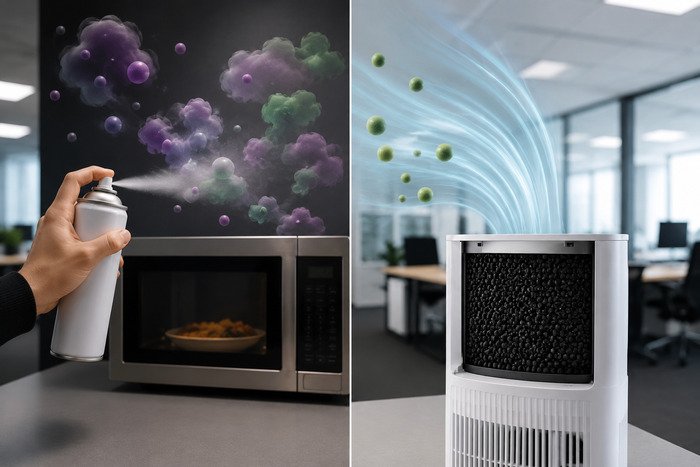
Unfortunately, these products usually mask odors rather than remove them.
The original odor molecules often remain in the air, simply mixed with perfume.
This can create an even stronger combination of scents that some employees find more unpleasant than the original food smell.
For long-lasting odor control, removing the odor molecules is much more effective than covering them up.
How Activated Carbon Filter Helps Remove Office Food Odor
Activated carbon helps remove office food odors by adsorbing odor-causing gases as contaminated air passes through the filter. Instead of covering the smell with fragrance, activated carbon holds many odor molecules within its microscopic pores.
Unlike an ordinary charcoal bag placed passively in a room, an activated carbon filter works more effectively when a fan actively draws pantry air through the carbon media. This allows the odor molecules to come into direct contact with the carbon surface.
The performance of an activated carbon filter depends on several factors:
- The amount and quality of activated carbon
- The volume of air passing through the filter
- The contact time between the air and carbon
- The type and concentration of the food odor
- Humidity inside the pantry
- The condition and remaining capacity of the filter
A thin carbon sheet may provide limited support for mild or occasional smells. Offices with persistent microwave and pantry odors may require a deeper carbon filter containing more adsorbent material.
Activated carbon does not capture every odor compound equally, and it cannot replace cleaning or proper ventilation. However, when it is correctly sized and used as part of a system combining source control, ventilation, and filtration, it can significantly reduce many common food odors in office pantries.
Can a HEPA Filter Remove Office Food Odors?
A HEPA filter alone cannot effectively remove most office food odors because it is designed primarily to capture airborne particles, not odor-causing gases.
HEPA filters can capture dust, allergens, smoke particles, and some fine particles released when food is cooked or reheated. However, many food smells are caused by gaseous compounds that can pass through a HEPA filter.
Activated carbon works differently. Its porous surface adsorbs many of the gaseous compounds responsible for food and microwave odors. For this reason, an air purifier designed for an office pantry should contain a sufficient amount of activated carbon rather than relying only on a HEPA filter or a thin carbon-coated sheet.
A combined system can provide broader air filtration:
- HEPA filter: captures airborne particles
- Activated carbon filter: adsorbs many odor-causing gases
For persistent pantry odors, filter type is only one part of the solution. The amount of activated carbon, airflow through the filter, room size, odor intensity, ventilation, and filter maintenance all affect the final performance.
Professional Solutions for Office Pantries
The best solution depends on the size of the pantry and the intensity of the odors.
Possible options include:
- Portable air purifiers with activated carbon filters
- HVAC carbon filtration systems
- Dedicated pantry exhaust filtration
- Activated carbon filter panels installed near microwave areas
For offices where food odors are a daily issue, professional carbon filtration provides a more effective and longer-lasting solution than fragrance-based products.
Filter replacement intervals depend on odor levels, airflow, and operating hours. Regular maintenance helps ensure consistent odor removal performance.
Further reading : Office Odor Control
Creating a Better Workplace
A clean workplace is not only about tidy desks and polished floors.
It is also about providing clean, fresh air that allows employees to focus on their work without unnecessary distractions.
Removing food odors helps create a more comfortable environment for everyone, regardless of cultural background or food preferences.
When employees enjoy a fresher workplace, companies can improve comfort, enhance visitor impressions, and support a healthier indoor environment.

Conclusion
Food odors are a normal part of everyday office life, especially in diverse workplaces where people enjoy different cuisines.
The challenge is not the food itself—it is allowing odors to spread throughout the office.
Instead of masking smells with air fresheners, professional activated carbon filtration helps remove odor molecules from the air, creating a cleaner and more comfortable workplace.
If your office struggles with persistent pantry or microwave odors, contact Darbune to discover professional activated carbon solutions designed to remove food odors and improve indoor air quality.